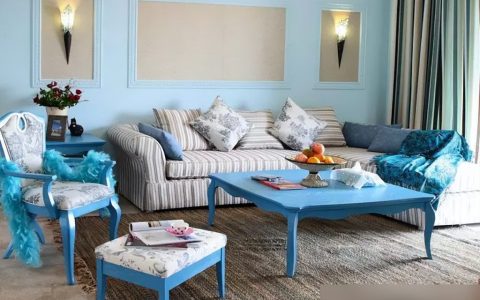
Thai decoration is not merely a functional transformation of living spaces, but a profound integration of local culture, natural philosophy, and modern life concepts. From the carved pillars of traditional Thai mansions to the minimalist designs of modern apartments, Thai decoration has always struck a balance between inheritance and innovation, forming a unique style system and practical logic.
I. Style Spectrum: From Tradition to Diversified Integration
Traditional Thai decoration can be regarded as a model of Southeast Asian aesthetics. Its core features lie in the naturalness of materials and the symbolism of symbols: Teak is the preferred wood, not only because of its moisture – resistant and anti – corrosion properties that adapt to the tropical climate, but also because of its warm texture that conveys a sense of nature; The walls are mostly painted with a mixture of red soil and lime, showing a simple ochre color; Wood carving craftsmanship is everywhere. Patterns such as lotus flowers and Naga (snake gods) on door lintels and window lattices not only decorate the space but also carry religious and cultural connotations. Traditional Thai homes pay attention to “a house must have a courtyard”. Through an open design, green plants and water features in the courtyard are introduced into the interior, forming a transparent pattern of “the house is in the scenery, and the scenery is in the house”.
With the process of globalization, modern Thai decoration has derived a diversified integration style. The Thai minimalist style retains traditional natural materials but strips away complex decorations. It creates a sense of tranquility with straight lines and white space, often using teak and off – white colors, and 点缀 with a small amount of Thai fabrics to brighten the space. The colonial mixed style combines European elements with local characteristics. For example, rattan decorations are added to the design of arched doors and windows, and French four – poster beds are combined with Thai silk curtains, presenting a unique charm of historical integration. The popular tropical industrial style in recent years is more innovative. It has exposed cement walls with metal pipes, but uses a large number of tropical plants and rattan furniture to neutralize the cold and hard feeling, becoming a favorite of young people.
II. Material Selection: Adapting to Climate and Environmental Protection Concepts
Thailand’s special tropical climate determines the core demands of decoration materials: moisture resistance, sun protection, and breathability. Among floor materials, solid wood floors need to undergo special carbonization treatment, or choose naturally corrosion – resistant woods such as teak and acacia; Matte and non – slip tiles are preferred, which not only adapt to the humidity in the rainy season but also reflect part of the sunlight to reduce the indoor temperature. Waterproof latex paint is generally used for wall treatment, and some high – end residences will use natural diatom mud. Its porous structure can not only adjust humidity but also absorb formaldehyde, meeting the current environmental protection needs.
The concept of environmental protection and sustainability has a profound impact on material innovation. The coconut shell fiberboard developed by local enterprises is made of coconut shell waste pressed, with strength close to that of medium – density fiberboard and zero formaldehyde emission; The palm leaf weaving material, after anti – mildew treatment, is widely used in decorations such as partitions and lamp shades, showing a natural texture while realizing resource recycling. The volcanic stone commonly used in outdoor spaces not only has excellent heat insulation performance, but its unique porous structure can also absorb rainwater and reduce surface runoff. The application of these materials makes Thai decoration often ahead of regional standards in environmental protection indicators.
III. Space Design: Function First and Living Scenes
The core of the design of small – sized apartments is maximizing space utilization. Apartments in cities such as Bangkok generally adopt an open layout. The integrated design of the living room, dining room, and kitchen reduces wall barriers, and custom furniture becomes the key – for example, combining the TV cabinet with the entrance cabinet, building drawers into the stairs, and converting the closed balcony into a multi – functional study. To address the pain points of the tropical climate, some apartments will install sunshade shutters on the windows, which can not only adjust the light but also guide the cross – ventilation, reducing the use of air conditioners.
Villa design pays more attention to the interaction between internal and external spaces. The traditional “L” – shaped layout encloses a central courtyard to ensure ventilation and lighting in each room; Modern designs often use large – area folding glass doors to completely connect the living room with the outdoor swimming pool and garden, forming a progressive spatial sequence of “indoor – semi – indoor – outdoor”. The design of the bathroom space is particularly delicate. Dry and wet separation is a basic requirement. High – end configurations will include rain – type shower heads and Thai massage bathtubs, and some will also set up open – air shower areas, allowing users to feel the natural light and shadow while bathing.
IV. Market Trends: Intelligence and Personalized Services
The popularization of smart homes has promoted the upgrading of decoration. The intelligent temperature control system can automatically adjust the operation of the air conditioner according to the temperature difference between indoor and outdoor, and cooperate with human sensors to realize that it turns on when people come and off when people leave; The combination of intelligent security and decoration is more ingenious. For example, cameras are hidden in wood carving decorations, and access control systems are integrated with entrance cabinets. Data shows that in 2024, more than 65% of newly built residences in Thailand were pre – installed with basic intelligent systems, an increase of 30 percentage points compared with 2020.
Personalized custom services have become the mainstream. More and more families choose one – stop services of “decoration + custom furniture”. Designers will have an in – depth understanding of customers’ living habits – for example, designing built – in coffee machines and cup storage areas for coffee lovers, and reserving family practice spaces for yoga lovers. A case study of the local decoration company “Baan Design” shows that the satisfaction rate of customers who adopt the whole – case customization is 92%, far exceeding the 68% of the traditional model.
The unique charm of Thai decoration lies in that it has never regarded style as a fixed template. Instead, it is based on climate adaptability, takes cultural inheritance as the soul, and constantly absorbs new elements and technologies, ultimately serving people’s living needs. Whether it is the tranquility of traditional mansions or the clever layout of modern apartments, they all tell the country’s understanding of “home” – it is not only a residence to shelter from wind and rain but also a space for the soul to dialogue with nature. With the integration of the ASEAN home furnishing market, the concepts and practices of Thai decoration are continuously providing reference and inspiration for the regional industry.
Original article, author:SUNNY COTTAGE CO., L,If reproduced, please indicate the source:https://www.decorationbydiana.com/22272/