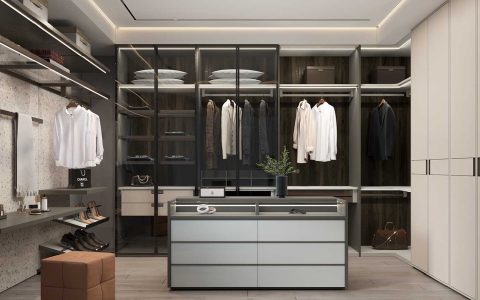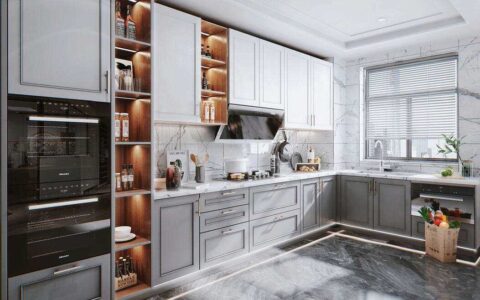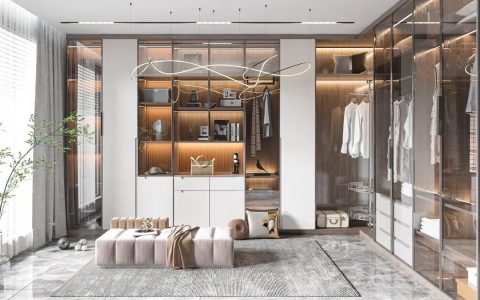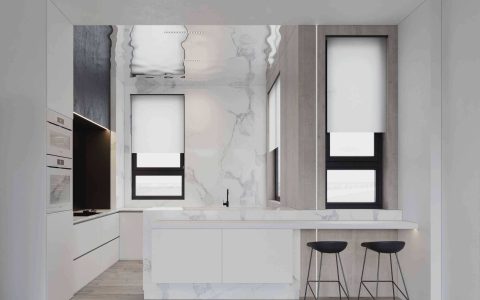
Two years left on the lease, a storage problem getting worse every month, and one uncomfortable thought: whatever you fix to these walls may not be yours to take when you leave. Renters in Bangkok usually reach this point after living with an awkward wardrobe and a pile of boxes for a year, and then discover that the price they were quoted is only half the calculation. The other half is time — how long you will stay, what can be dismantled, and what the apartment has to be returned to at the end. This guide works through that arithmetic before you order anything.
Table of Contents
- 1. Price Means Nothing Until You Divide by Time in the Unit
- 2. What Can Move With You, and What Cannot
- 3. The Renter’s Four Options, Ranked by Exit Cost
- 4. Agree These Points in Writing Before Any Order
- 5. Where Renters Lose Money Most Often
- 6. The Short Answer for Tenants
1. Price Means Nothing Until You Divide by Time in the Unit
The judgement to make first: for a tenant, a quoted price is not a cost — it is a cost divided by the months you will actually spend with the furniture. A wardrobe wall that would be a reasonable decision for an owner looking at ten years may be an expensive one for someone leaving in eighteen months, even at the same price, if most of it cannot be taken along. This single division changes the ranking of almost every option a renter considers.

What actually sits inside a renter’s cost
Four items belong in the same calculation. The unit itself is the obvious one. Installation is the second — and for a renter it is normally the same or higher, because delivery and working hours in a managed building are often restricted. The third is removal and making good at the end of the tenancy: patching fixings, touching up paint and returning walls to their original condition, which is labour you pay for whether or not the furniture was yours. The fourth is the part you cannot recover: everything that stays behind when you leave. Only after those four are on the page does the quoted number mean anything.
2. What Can Move With You, and What Cannot
Constructions that can be relocated
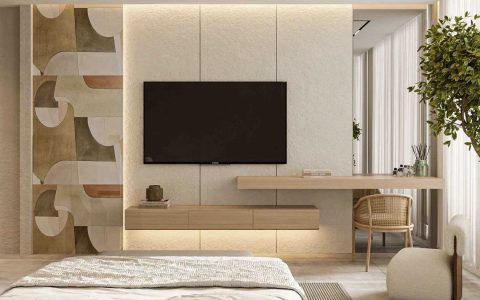
Furniture survives a move when it is built as a set of modules rather than as one fitted object. That means panels that assemble on site, adjustable feet instead of a scribed base, standard module widths that do not depend on one particular wall, and a design that is not cut around a column, a shaft or a sloping ceiling. Cabinets built this way can be dismantled, carried out and reassembled in a different room, sometimes with a small amount of adaptation. They tend to cost a little more per unit than a simple fixed box, and they are the only category where a renter’s money stays with the renter.
Constructions that are effectively permanent
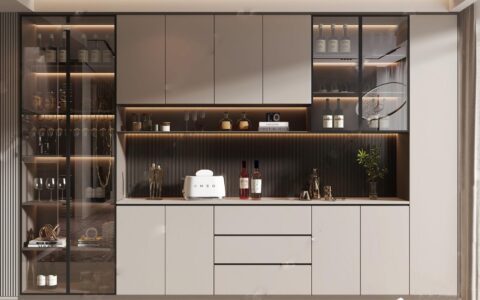
Anything scribed to a wall, filled to the ceiling, wrapped around a service shaft or built under a staircase is made for one room and only one room. Full-height wardrobes with ceiling fillers, units that conceal plumbing or electrical runs, and any cabinetry shaped around a structural element fall into this group. They are usually the best-looking and the most space-efficient solutions, and they are also the ones that stay behind. That is not automatically a bad decision — offering them to the landlord can be part of the negotiation — but it should be a conscious one, taken with the price divided over the remaining lease months, not discovered at moving day.
3. The Renter’s Four Options, Ranked by Exit Cost
Ranked from the easiest exit to the hardest, the four realistic routes for a tenant are these.
- Modular units you own and can dismantle. The highest chance of recovering your money, at a slightly higher unit price. Best choice when the lease has two years or more left and the next apartment is likely to have a similar wall to work with.
- A shared arrangement with the landlord. The landlord contributes to a fitted unit, or accepts it as an improvement, in exchange for a written agreement about who keeps it and how it affects rent or deposit. This can be the cheapest route of all, and it depends entirely on getting the agreement in writing before the order is placed.
- A fully fitted unit you accept losing. Reasonable only for a long lease where the daily gain is large and the remaining months are many. Treat the entire cost as consumption, not as an asset, and check that it makes sense on that basis alone.
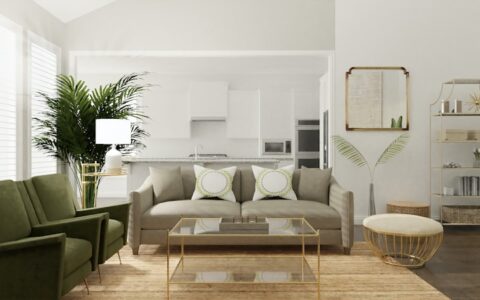
- Freestanding furniture. The simplest exit, usually the lowest entry price, and the weakest performer in a humid, tight unit where awkward corners waste space that a fitted unit would use. Still the correct answer for a lease with less than a year left.
4. Agree These Points in Writing Before Any Order
Verbal reassurance from a landlord or an agent is not a decision you can rely on at the end of a tenancy. Before a single panel is cut, settle these points and keep the confirmation somewhere you can find it in two years’ time.
- Whether you are permitted to fix anything to walls, floors or ceilings, and by what method
- Who repairs and repaints the fixing points when you leave, and at whose cost
- Whether the unit stays with the apartment or leaves with you — decided now, not at handover
- What happens if you terminate the lease early, given that the furniture was bought for this room
- Whether any agreed improvement affects the deposit, the rent or the renewal terms
- The building’s rules on delivery, lift use and permitted working hours for installation
- If the landlord is contributing, the amount, the timing, and who signs the order with the supplier
5. Where Renters Lose Money Most Often
Four patterns account for most of the value that tenants never recover.
- Building to this apartment’s quirks. A unit designed around an odd wall fits one room in one building. Every dimension taken from something unusual reduces the chance it will work in the next home, which is the whole reason a renter pays more for modular construction in the first place.
- Choosing a finish that cannot be extended later. A distinctive front or a discontinued board cannot be matched when the unit is reassembled with an extra module elsewhere. Neutral, currently produced finishes are the practical choice for furniture that is going to move.
- Forgetting the exit works. The cost of dismantling, carrying out, transporting and making good the old apartment is easy to overlook while the project is exciting. It belongs in the budget from the first conversation, because it is paid either way.
- Ordering before the lease is confirmed. A renewal that falls through, or a transfer to another city, converts a reasonable purchase into an immediate loss. Timing the order after the contract is secure is free insurance.
6. The Short Answer for Tenants
For a Bangkok renter, the price of custom built-in furniture is only worth paying when three conditions hold at once: the remaining lease is long enough for the daily benefit to justify the outlay, the construction is modular enough to be dismantled and reused, and the landlord has confirmed in writing what may be fixed and what happens at handover. Where any of the three is missing — especially a short remaining term — freestanding furniture is usually the wiser purchase, and a fitted unit becomes consumption rather than an investment.
Start by checking your lease end date and renewing the contract if you can, then measure the walls and decide which storage you genuinely need. Ask any supplier, including established local providers such as SUNNY COTTAGE CO., LTD., to quote in two versions — one fixed and one fully demountable — so that the price of flexibility is visible next to the price of the fitted result. That single comparison is what tells a tenant whether the decision is sound before the deposit is at stake.
This article is from a submission and does not representThailand Interior Design | Whole House Customization | Sunny Cottageposition,If reproduced, please indicate the source:https://www.decorationbydiana.com/23079/