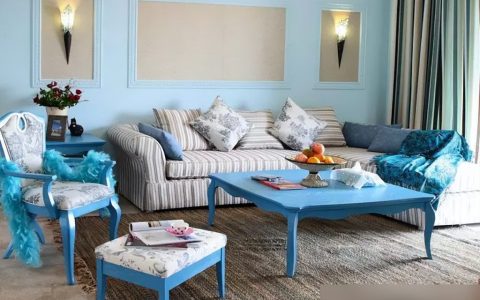
Customized furniture refers to furniture companies treating each consumer as a separate niche market based on large-scale production. Consumers design the furniture they want according to their own requirements, while companies manufacture personal exclusive furniture based on consumers’ design requirements. In the domestic furniture market, many merchants promote solid wood furniture that refers to furniture with solid wood frames, such as tabletops, door panels, side panels, partitions, and baseboards. Customized furniture is known for its customization, which can be customized according to the size of the house, design layout, and other factors.
The advantage of customized furniture: Customized furniture does not require repeated construction. Customized furniture can meet the personalized needs of different consumers. Under traditional marketing models, furniture companies often follow current furniture trends and conduct furniture production and research and development based on simple market research. However, the furniture styles produced by this model cannot meet personal preferences or do not meet standards. Customized marketing designs furniture based on individual needs and segments the market into individuals. Designers can propose specific requirements based on personal preferences, such as personalized specifications, color schemes, etc. for design. Reduce inventory backlog. Under traditional marketing models, furniture companies reduce product costs and seek more profits through large-scale production. This type of mass-produced furniture may become unsold or overstocked due to similarity, and if there is a small accident in the market, it will result in resource waste. However, customized marketing has almost no inventory because it is produced based on consumer orders, which accelerates capital turnover.
Customized furniture planning is more reasonable. As is well known, furniture is the protagonist and soul of the entire living space, and its spatial share is particularly important. Reasonable spatial allocation makes the home warmer. Reduce marketing costs. In traditional marketing models, furniture companies often use advertising and establishing specialty stores to drive sales and occupy the market, resulting in higher costs. By demanding reasonable furniture prices and quality protection, furniture can be sold smoothly. In customized marketing, the sales process and various expenses are reduced because manufacturers directly face consumers. Beneficial for accelerating product development. In traditional marketing models, many designers in furniture companies develop products based solely on simple market research and work behind closed doors. The furniture designed is difficult to meet the needs of the public and has significant limitations. In customized marketing, designers can easily understand consumers’ needs and have many opportunities to communicate face-to-face with them, thus developing products that are close to consumers’ needs.
The details of customized furniture are very complex, from consumer demand analysis to ordering, on-site installation, production organization, distribution, and service. The product customization process involves many panels and hardware, and all links must be linked together without deviation. This requires companies to be meticulous in their work and rigorous in their management systems, which also tests the comprehensive quality of their employees. For more information on whole house customization brand agents and integrated wardrobes, please follow us.
Original article, author:SUNNY COTTAGE CO., L,If reproduced, please indicate the source:https://www.decorationbydiana.com/22393/